Climate Control Built Into Construction Planning
New Construction HVAC Installation in Riverton for residential developments, commercial facilities, and ground-up building projects
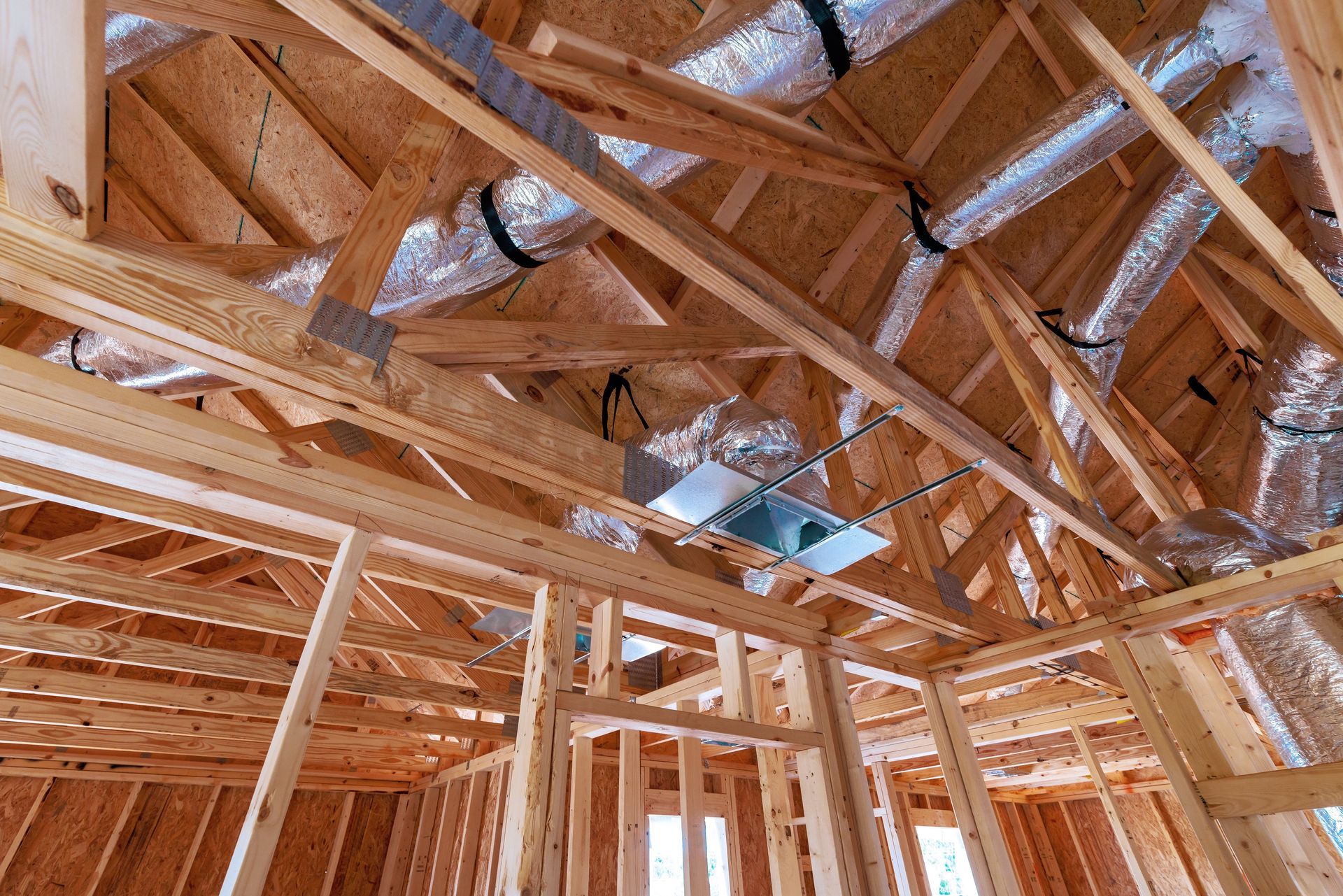
Proper ductwork sizing and equipment placement decisions happen during framing and rough-in phases, not after walls are closed and finishes are applied. RH Mechanical, LLC works alongside builders, contractors, architects, and project managers throughout construction timelines across Riverton, South Jordan, and Salt Lake Valley to coordinate HVAC infrastructure that aligns with structural layouts, occupancy requirements, and energy performance targets. New construction projects require system planning that accounts for roof loads, ventilation codes, insulation values, and equipment access before concrete is poured or trusses are set.
Installation involves load calculations that determine heating and cooling capacity based on building orientation, window placement, insulation specifications, and intended use patterns, followed by ductwork fabrication sized to deliver balanced airflow without noise or pressure loss. Equipment selection includes furnaces, rooftop units, mini splits, and VRF systems matched to building types ranging from single-family homes to multi-tenant commercial spaces.
Request a pre-construction consultation to align HVAC planning with your building timeline and design specifications.
How New Construction HVAC Addresses Long-Term Performance
System design begins with reviewing architectural plans to identify optimal equipment locations, duct pathways, and ventilation routing that avoid conflicts with plumbing, electrical conduit, and structural elements. Coordination prevents last-minute modifications that compromise airflow efficiency or require expensive rework after drywall installation, and ensures code-compliant installations that pass inspection without delays.
Once installation is complete, occupants experience even temperatures across all rooms and zones without hot or cold spots caused by undersized ducts or poorly positioned supply registers. Buildings maintain stable indoor climates during Utah's temperature swings, and equipment operates within designed parameters that prevent premature wear from oversized systems cycling too frequently or undersized systems running continuously under load.
New construction HVAC planning also determines whether a property benefits from zoned control systems that allow independent temperature settings for different floors or tenant spaces, or whether a single-zone approach meets comfort needs while simplifying maintenance. RH Mechanical, LLC evaluates these options during the design phase when system architecture can still be adjusted without demolition or retrofit costs.
Answers to Frequent Service Questions
HVAC installation for new construction differs significantly from replacement projects because decisions affect building performance for decades.
What happens during the HVAC planning phase?
Load calculations determine required heating and cooling capacity based on square footage, insulation values, window area, and occupancy, while duct design establishes pathways that deliver balanced airflow without requiring excessive fan power or creating noise problems in finished spaces.
How does equipment sizing affect long-term costs?
Oversized systems cycle on and off too frequently, reducing efficiency and increasing wear on compressors and blower motors, while undersized systems run continuously without reaching set temperatures, leading to higher utility bills and shorter equipment lifespan across Riverton and South Jordan properties.
When should HVAC contractors join the construction team?
Coordination should begin during architectural design and continue through framing, rough-in, and final startup to ensure ductwork, equipment pads, and electrical service align with construction schedules and avoid conflicts that delay inspections or occupancy permits.
Why do rooftop systems suit commercial construction?
Rooftop installations free interior floor space for revenue-generating uses, simplify maintenance access without disrupting occupied areas, and allow modular capacity expansion as tenant needs grow without major interior renovations.
What documentation do new construction projects require?
Code-compliant installations include commissioning reports, airflow test results, refrigerant charge verification, and warranty registrations that protect property owners and satisfy lender requirements for construction financing and certificate of occupancy approvals.
RH Mechanical, LLC supports Utah's expanding residential and commercial development with HVAC installations designed for reliable climate control and energy-efficient operation. Contact our team to schedule a new construction HVAC consultation tailored to your project scope and timeline.